I sold 450 copies of my first Steam game. Here's what I learned.
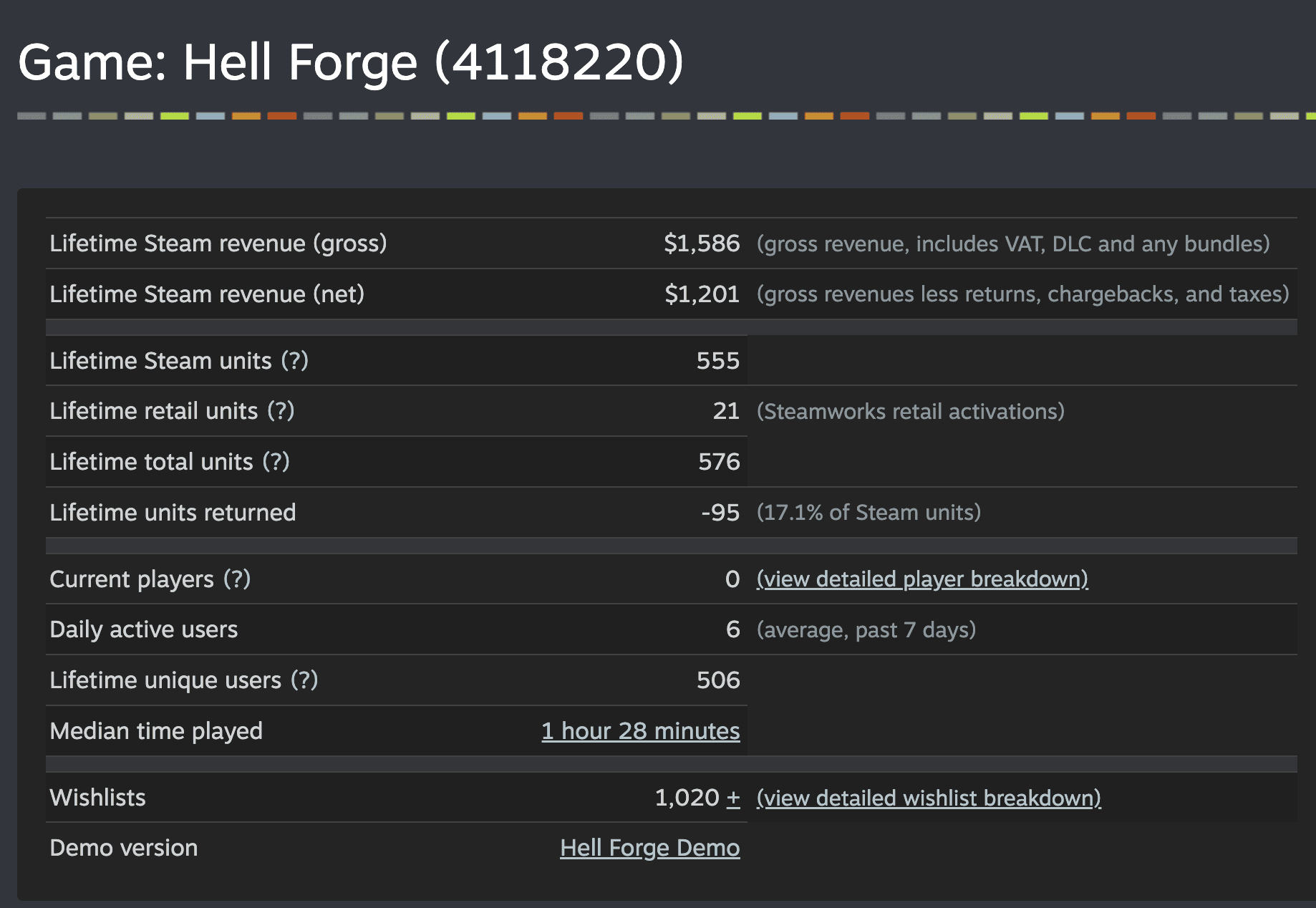
450 copies, $1,500 gross. Not a success story — but it cost me enough to be worth writing down what it taught me.
Posted by
 Gaby Kim
Related reading
Jul Dev Log -- Regional Competition, Workout Polish, Gym Rats
The demo is turning into a playable vertical slice with regional competition, clearer fatigue feedback, and NPC gym rats taking over equipment.
Jun Dev Log — You Only Get What You Train
Three things shipped this month for Ego Lifting Simulator: muscle growth driven by what you actually train, a stamina effect, and character selection.
My Self-Taught Blender Pipeline for a Weight Lifting Game Character
How I built a Blender character pipeline from scratch — low poly base, shape keys for muscle growth, inner lines, per-muscle flush effect, and facial expressions — for Ego Lifting Simulator.
I launched my first commercial game on Steam this March. As of writing: 450 copies sold, $1,500 gross. Not a success story — but it cost me enough to be worth writing down what it taught me.
Here are the three lessons I wish I knew before I started.
#1 Players don't care how hard you worked. They care whether the game is fun.
It sounds obvious written down. It was not obvious to me at the time.
During development I worked roughly 11 hours a day for 6 months, weekends included. By the numbers, more than any full-time job I've ever held.
I genuinely believed players would love my game once they saw how much of myself I had poured into it — that "a random no-name guy putting his soul into a project" was, on its own, a reason to buy. It is not.
How to make a game fun is its own article. The practical takeaway: put yourself in the player's shoes and study the genre you're building in. Every successful genre has a well-defined entertainment formula — players know what they want from a roguelike or a survival game. Your unique selling point isn't a replacement for that formula. It's an amplifier on top of it.
#2 Your first game will probably fail financially. Plan for that.
You'll point to Schedule I or Risk of Rain — solo-dev breakthroughs that earned millions. Fair. Now name 5 failed first titles. You probably can't, and that's the problem. We only get to see the winners, so we model our expectations on them. That's survivorship bias, and it's expensive.
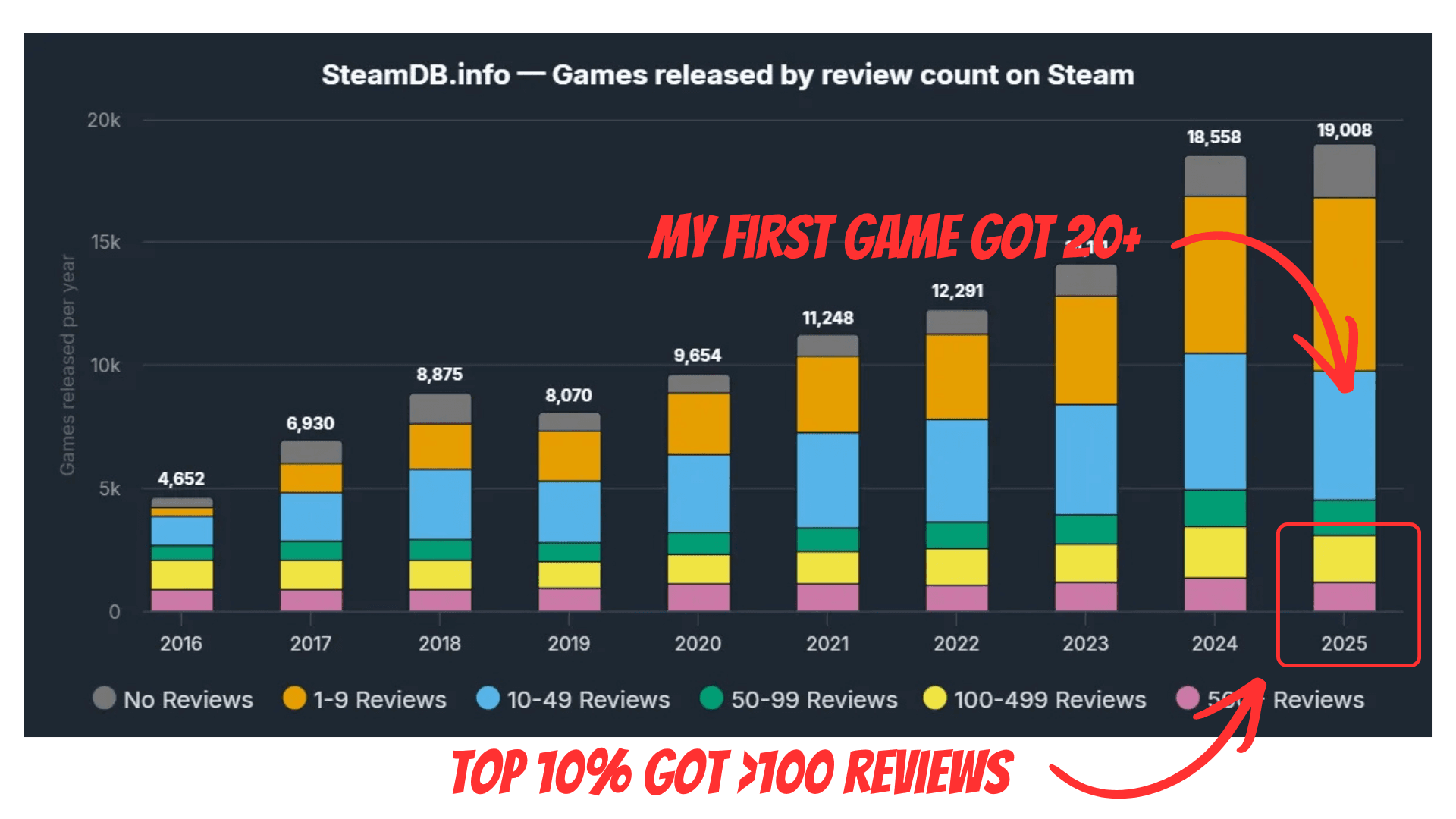
The real numbers: roughly 20,000 games released on Steam in 2025, and only the top 10% crossed 100 reviews. At a typical 1-review-per-30-sales ratio, that threshold represents about 3,000 copies sold. The 90% below that line sold less. Most sold far less.
My first title got 20 reviews in its first month. That still places it above the median Steam release — which tells you how brutal the bottom of the distribution is.
Knowing this early is freeing, not discouraging. If you accept that your first game is most likely tuition for the next one, you stop optimizing for an outcome that statistically isn't coming and start optimizing for what you can actually keep: skills, audience, and a real track record of shipping.
#3 Ship it anyway.
The internet is saturated with dev cheat sheets and "dos and don'ts." Now AI can spit out a "professional" roadmap on demand too. But none of it — not even this article — becomes yours until you've shipped something and felt the market hit back.
You can read every postmortem on Reddit and every Chris Zukowski post, and your first game will still have problems you didn't predict — because the market teaches in a language you can only learn by being in the room.
Mistakes are the price of admission. They're embarrassing, and that's fine. Shipping a flawed game in public is a categorically different achievement than not shipping at all. Financially it might be a loss. As a force for growth, it's the best investment I've ever made.
I'm building my second game now — a physics-based weight lifting simulator where everything that can go wrong with a 200kg barbell does. If you want the raw dev logs (numbers, mistakes, and all), subscribe below.